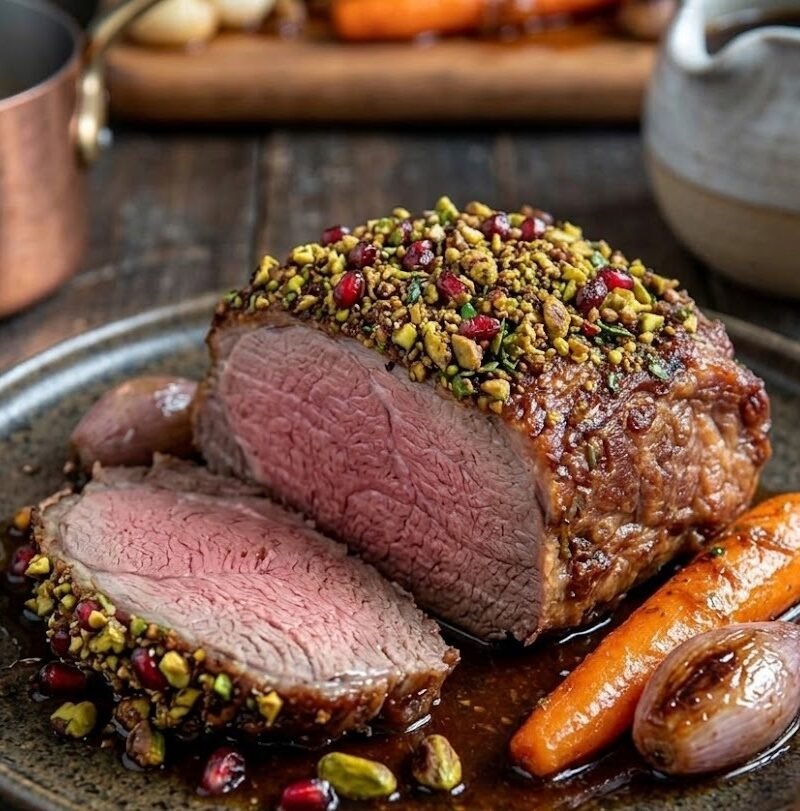
This Mary Berry-inspired slow roasted lamb is the sort of Sunday roast that feels generous without being fussy. The lamb cooks low and slow until it’s deeply savoury, fork-tender, and infused with rosemary, garlic, and lemon. It’s an easy recipe with a little hands-off time, plus a simple pan gravy that tastes like you’ve been tending it all afternoon. Total time is about 4 hours 35 minutes, with only 15 minutes of prep.
Ingredients
For the lamb
- 2.3–2.7kg lamb shoulder (bone-in preferred)
- 2 tbsp olive oil
- 5 garlic cloves, finely grated or crushed
- 2 tbsp fresh rosemary, finely chopped (or 2 tsp dried)
- 1 tbsp fresh thyme leaves (or 1 tsp dried)
- Finely grated zest of 1 lemon
- 2 tsp fine sea salt
- 1 tsp freshly ground black pepper
For the roasting tray
- 2 large onions, thickly sliced
- 2 carrots, cut into chunky pieces
- 2 celery sticks, cut into chunky pieces
- 250ml dry white wine (or use extra stock)
- 500ml lamb or chicken stock, hot
For the gravy
- 1 tbsp plain flour
- 1–2 tsp redcurrant jelly (optional)
- Salt and pepper, to taste
How to Make Mary Berry Slow Roasted Lamb
Prepare the oven and roasting tin
- Prepare the oven: Preheat the oven to 220°C or 200°C fan. Place a shelf in the middle so the heat circulates evenly.
- Build a flavour base: Scatter the onions, carrots, and celery in a large roasting tin. Pour in the white wine and hot stock, then set aside while you season the lamb.
Mix the rosemary-garlic rub
- Make the rub: In a small bowl, mix the olive oil, garlic, rosemary, thyme, lemon zest, salt, and black pepper until you have a thick paste.
- Season the lamb: Pat the lamb shoulder dry with kitchen paper. If the skin or fat cap is thick, make a few shallow slashes with a sharp knife, then rub the paste all over, pushing it into the slashes.
Roast low and slow
- Start hot for colour: Sit the lamb on top of the vegetables in the roasting tin. Roast uncovered for 20 minutes to give the outside a bit of colour.
- Cover and reduce the heat: Turn the oven down to 160°C or 140°C fan. Cover the tin tightly with foil so the steam stays trapped.
- Slow roast until tender: Roast for 3½ to 4 hours, until the lamb is very tender and a fork twists easily in the meat. If you want a deeper colour on top, remove the foil for the last 20 minutes.
Rest (cool) the lamb
- Rest before carving: Lift the lamb onto a warm platter and cover loosely with foil. Rest for 20 to 30 minutes so the juices settle and the meat stays succulent.
Make the gravy and serve (assemble)
- Strain the pan juices: Strain the liquid from the roasting tin into a jug, pressing the vegetables to extract their flavour. Spoon off most of the fat from the top.
- Thicken gently: Tip the juices into a saucepan. Whisk the flour with a small splash of cold water to form a smooth slurry, then whisk it into the gravy. Simmer for 5 to 8 minutes until lightly thickened.
- Finish the flavour: Stir in redcurrant jelly if using, then season carefully with salt and pepper.
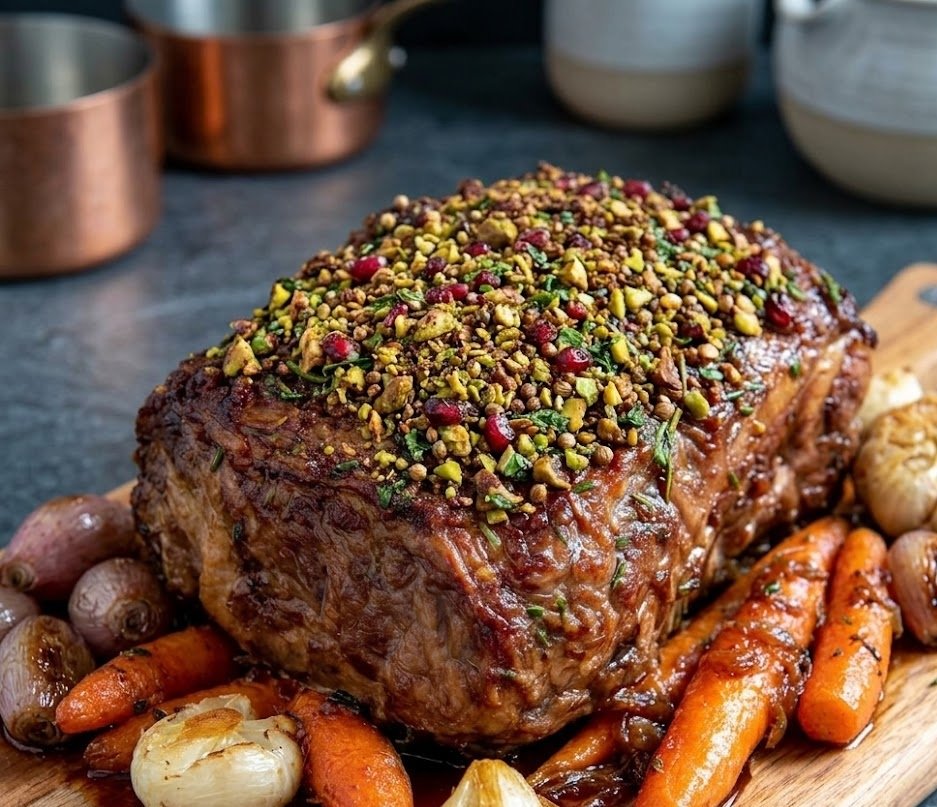
- Carve or pull and plate: Carve thick slices, or pull the lamb into chunks for a more relaxed serving style. Spoon over the gravy and bring it to the table while it’s piping hot.
Tips
How do I stop slow roasted lamb from drying out?
Seal the roasting tin tightly with foil once you drop the oven temperature. That trapped steam effectively braises the lamb, keeping it moist. Also make sure there is always some liquid in the tray, top up with hot stock if it looks low.
Why isn’t my lamb “pull-apart” tender?
It simply needs more time. Lamb shoulder becomes shreddable when the connective tissue has fully broken down, which usually means cooking longer at the low temperature rather than turning the heat up.
Can I make the gravy stronger and darker?
Uncover the lamb for the last 20 minutes to deepen the roasting flavours, then simmer the strained juices a little longer so they reduce. If you like, add a splash of Worcestershire sauce or a little extra redcurrant jelly to round it out.
What’s the best tin to use?
Choose a roomy roasting tin with high sides so the liquid doesn’t evaporate too quickly. You want the vegetables sitting in the wine and stock, not crammed underneath the lamb.
Serving Suggestions
- Roast potatoes and honey-glazed carrots
- Buttery mash and buttered peas
- Mint sauce or mint jelly on the side
- Steamed greens, like broccoli or spring greens
- Warm Yorkshire puddings, if you fancy a proper feast
Storage
Room temperature
Let the lamb cool for no more than 2 hours, then refrigerate. Keep it covered while it rests so it stays juicy.
Refrigerator
Store lamb and gravy in separate airtight containers for up to 3 days. Reheat gently in a covered dish with a splash of stock, or warm in a saucepan over low heat so the meat stays tender.
Freezing
Freeze shredded or sliced lamb (ideally with a little gravy) for up to 2 months. Defrost overnight in the fridge, then reheat slowly until piping hot throughout.
Nutrition
- Calories: 520 kcal
- Carbohydrates: 6 g
- Protein: 48 g
- Fat: 32 g
- Saturated Fat: 12 g
- Sodium: 780 mg
Nutrition values are estimates and will vary depending on the cut of lamb, exact portion size, and brands used.
FAQs
What cut of lamb is best for slow roasting?
Lamb shoulder is the best choice for slow roasting because it has enough fat and connective tissue to become tender and juicy after a long cook. Lamb leg is leaner and better suited to a shorter roast if you want neat slices.
What temperature should I cook slow roasted lamb at?
After an initial blast at 220°C (200°C fan) for colour, cook it low and slow at 160°C (140°C fan). This gently breaks down the shoulder without drying it out.
Do I need to sear lamb before slow roasting?
You don’t need to sear it in a pan. Roasting it uncovered at a high temperature for the first 20 minutes gives you the same benefit and keeps the washing up simple.
Can I cook slow roasted lamb the day before?
Yes. Cool, refrigerate, and reheat covered with a splash of stock at 160°C (140°C fan) until piping hot. It often tastes even better the next day, especially if you store it with some of the cooking juices.
How do I know when the lamb is done?
For pull-apart shoulder, it’s done when a fork twists easily and the meat yields without resistance. If you’re using a thermometer, you’re looking for a higher internal temperature than a pink roast, typically around 92–95°C for shreddable tenderness.
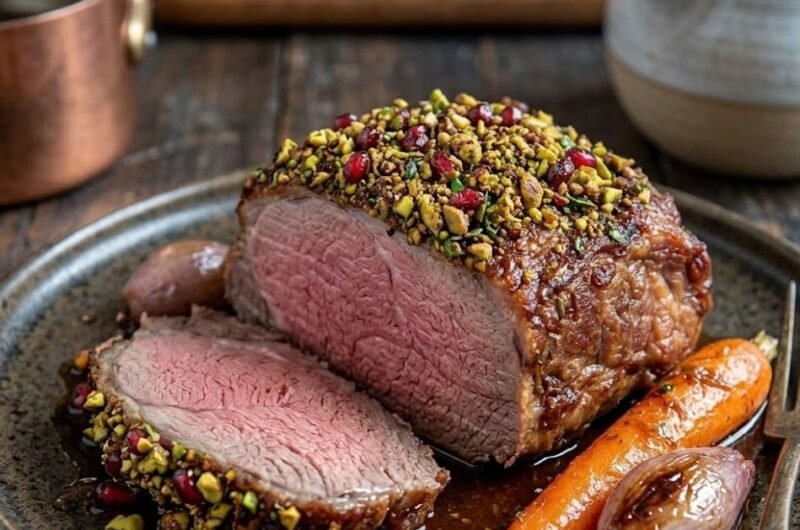
Mary Berry Slow Roasted Lamb Recipe
Course: DinnerCuisine: BritishDifficulty: Easy8
servings15
minutes4
hours275
minutes520
kcal4
hours15
minutesTender, slow roasted lamb with rosemary, garlic, and lemon, cooked until pull-apart soft and served with an easy pan gravy. A classic British-style roast that’s simple enough for beginners.
Ingredients
- For the lamb
2.3–2.7kg lamb shoulder (bone-in preferred)
2 tbsp olive oil
5 garlic cloves, finely grated or crushed
2 tbsp fresh rosemary, finely chopped (or 2 tsp dried)
1 tbsp fresh thyme leaves (or 1 tsp dried)
Finely grated zest of 1 lemon
2 tsp fine sea salt
1 tsp freshly ground black pepper
- For the roasting tray
2 large onions, thickly sliced
2 carrots, cut into chunks
2 celery sticks, cut into chunks
250ml dry white wine (or extra stock)
500ml lamb or chicken stock, hot
- For the gravy
1 tbsp plain flour
1–2 tsp redcurrant jelly (optional, for shine and sweetness)
Salt and pepper, to taste
Directions
- Preheat oven to 220°C (200°C fan). Sit onions, carrots, and celery in a large roasting tin; add wine and stock.
- Mix oil, garlic, herbs, lemon zest, salt, and pepper. Rub all over the lamb, pushing into any slashes.
- Roast uncovered for 20 minutes, then cover tightly with foil and reduce oven to 160°C (140°C fan).
- Slow roast 3½–4 hours until very tender. Uncover for the last 20 minutes to colour if needed.
- Rest lamb, covered, for 20–30 minutes.
- Strain pan juices into a jug, skim fat, then simmer with flour to thicken. Stir in redcurrant jelly if using and season.
- Carve or pull the lamb and serve with the gravy.
Notes
- For truly pull-apart lamb, aim for a long cook at low heat and a proper rest.
- Keep the foil tightly sealed so the lamb braises gently and stays moist.
- If the tray looks dry during cooking, add a splash of hot stock.