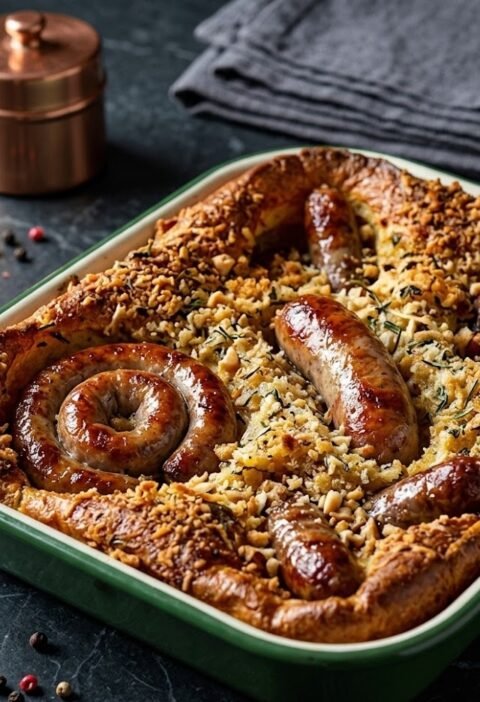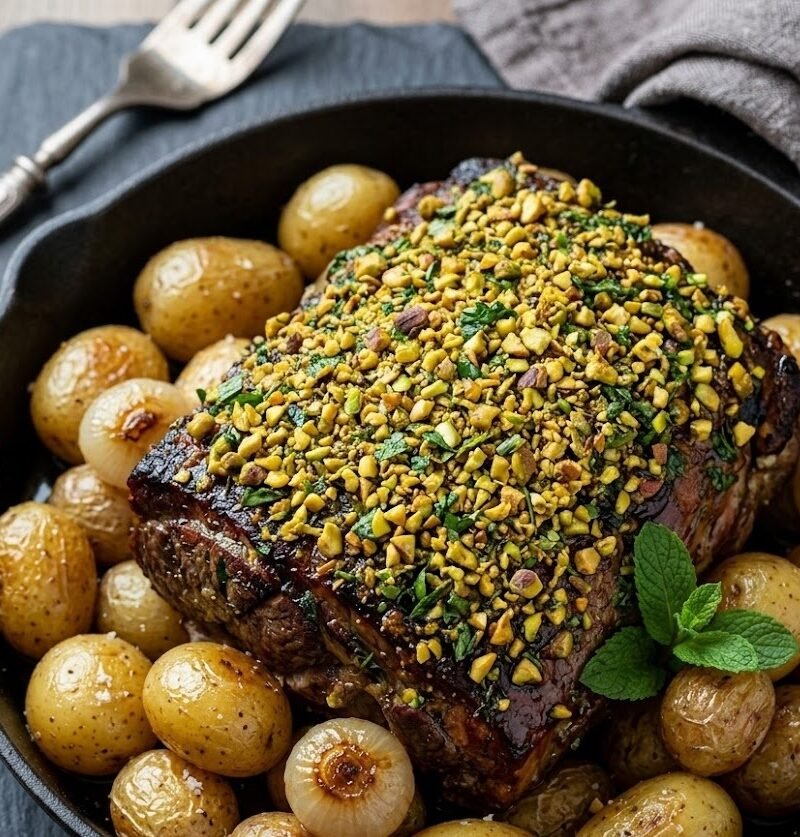
This slow roast lamb shoulder with potatoes is the sort of comforting Sunday roast that quietly does the work for you. The lamb turns spoon-tender with crisp, deeply flavoured edges, while the potatoes soak up all the rosemary, garlic, and rich pan juices. It’s an easy, low-fuss recipe that feels special, even for beginners, because the oven does most of the heavy lifting. Total time is around 4 hours 30 minutes, including resting.
Ingredients
For the lamb
- 1 lamb shoulder (about 2–2.3kg), bone-in
- 2 tbsp olive oil
- 1 tbsp Dijon mustard
- 2 tsp fine sea salt
- 1 tsp freshly ground black pepper
- 6 garlic cloves, peeled and cut into slivers
- 2 tbsp fresh rosemary leaves, roughly chopped (or 2 tsp dried rosemary)
- 2 tbsp fresh lemon juice (to finish)
For the potatoes and pan juices
- 1 large onion, thinly sliced
- 1.2kg Maris Piper or King Edward potatoes, peeled and sliced about 5mm thick
- 2 bay leaves
- 300ml lamb or chicken stock, hot
- 150ml dry white wine (or use extra stock)
To serve (optional)
- Fresh mint, roughly chopped
- Steamed greens or buttered peas
- Mint sauce or redcurrant jelly
How to Make Mary Berry Slow Roast Lamb Shoulder with Potatoes
- Prepare the oven: Preheat the oven to 200°C or 180°C fan. Place a shelf in the middle of the oven so the lamb roasts evenly and the potatoes colour nicely.
- Build the potato base: Put the sliced onion in a large deep roasting tin. Layer over the sliced potatoes and tuck in the bay leaves. Season the potatoes lightly with a pinch of salt and pepper.
- Season the lamb: In a small bowl, mix the olive oil, Dijon mustard, rosemary, salt, and pepper. Using a small sharp knife, make slits all over the lamb and push a garlic sliver into each one.
- Assemble: Rub the rosemary mixture all over the lamb. Sit the lamb shoulder on top of the potatoes so the juices can baste them as it cooks.
- Add the roasting liquid: Pour the hot stock and white wine into the tin, aiming around the sides (not over the lamb). You want the potatoes partly submerged, while the top of the lamb stays dry for good browning.
- Slow roast (covered): Cover the tin tightly with foil. Roast for 30 minutes at 200°C (180°C fan), then reduce the oven to 160°C (140°C fan) and cook for 3 hours.
- Finish (uncovered): Remove the foil. Spoon a little of the pan juices over the potatoes. Return to the oven uncovered for 30–45 minutes, until the lamb is richly browned and the potatoes are tender and golden.
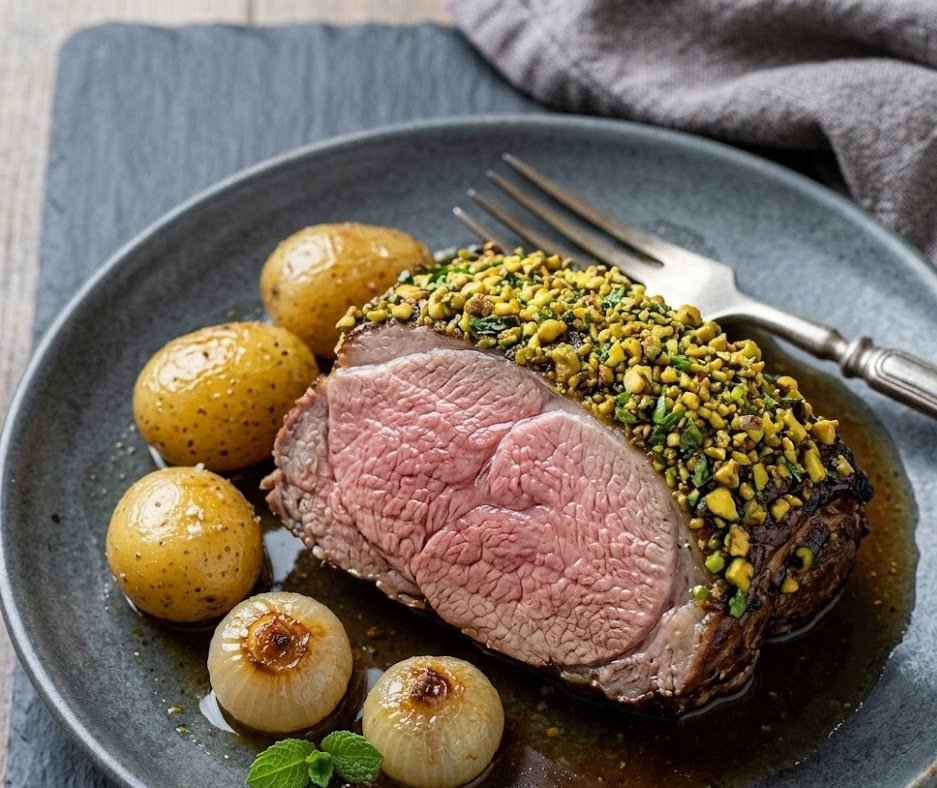
- Rest and serve: Lift the lamb onto a board, cover loosely with foil, and rest for 20–30 minutes. Stir the lemon juice into the tin juices, then carve or pull the lamb and serve with the potatoes and onions.
Tips
How do I stop the potatoes from staying hard?
Slice them evenly (around 5mm) and make sure there is enough hot stock in the tin to come partway up the potato layers. If your roasting tin is very wide, you may need an extra splash of stock to keep the base from drying out.
What if my lamb is tender but not browned?
That final uncovered blast is what gives you colour. If you want a deeper crust, increase the oven to 200°C (180°C fan) for the last 10 minutes, watching closely. Keep the potatoes protected with a loose piece of foil if they are already golden.
Can I prepare it ahead without ruining the texture?
You can slice the potatoes and onions a few hours ahead and keep them submerged in cold water, then drain and dry well before layering. The lamb can be slashed, garlicked, and rubbed with seasoning the night before, then chilled and brought to room temperature for 30 minutes before roasting.
Why are my pan juices greasy?
Lamb shoulder is naturally rich. After roasting, spoon off a little surface fat, or pour the juices into a jug and let the fat rise for a minute before serving. A squeeze of lemon brightens everything and helps balance the richness.
Serving Suggestions
- Serve with steamed broccoli, green beans, or spring greens.
- Add a bowl of mint sauce, redcurrant jelly, or a simple yoghurt and cucumber dressing.
- Bring it to the table with warm gravy made from the pan juices.
- Turn leftovers into lamb sandwiches with mustard and rocket.
Storage
Room temperature
Do not leave cooked lamb out for more than 2 hours. Once it has cooled slightly, refrigerate promptly.
Refrigerator
Store lamb and potatoes in an airtight container for up to 3 days. Reheat in a covered ovenproof dish at 180°C (160°C fan) for 20–30 minutes, adding a splash of stock to keep everything moist.
Freezing
Freeze shredded or sliced lamb (with a little juice) for up to 2 months. Potatoes can be frozen, but they soften on thawing, so they are best eaten fresh. Defrost overnight in the fridge and reheat until piping hot throughout.
Nutrition
- Calories: 650 kcal
- Carbohydrates: 35 g
- Protein: 45 g
- Fat: 38 g
- Saturated fat: 14 g
- Sodium: 780 mg
Nutrition values are estimates and will vary depending on the cut of lamb, exact portion sizes, and the stock used.
FAQs
What temperature should lamb shoulder be cooked at for slow roasting?
For this style of slow roast, start hot at 200°C (180°C fan) for 30 minutes, then reduce to 160°C (140°C fan) for the long cook. The initial heat kick-starts browning, and the lower temperature gently breaks down the shoulder until it’s tender.
Do I need to sear lamb shoulder before slow roasting?
Not for this recipe. The lamb browns in the oven during the uncovered finishing stage, which keeps the method simple and still gives you great colour and flavour.
How do I know when slow roast lamb shoulder is done?
It’s done when a fork twists easily in the meat and it feels very soft when pressed. If it still feels tight or chewy, cover again and roast for another 20–30 minutes, then check once more.
Can I make slow roast lamb shoulder with potatoes without wine?
Yes. Replace the wine with the same amount of hot stock. You will still get plenty of flavour from the lamb juices, garlic, rosemary, and onions.
What potatoes are best for roasting under lamb?
Floury potatoes such as Maris Piper or King Edward are ideal. They soften beautifully and absorb the pan juices without turning waxy.
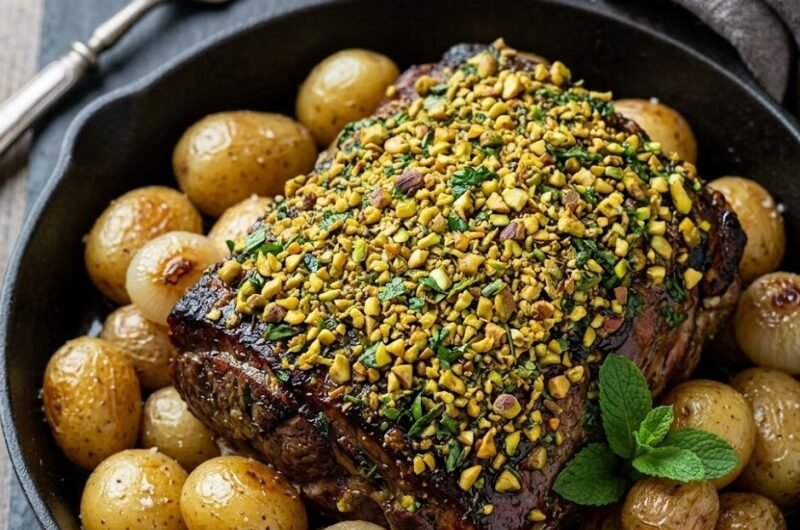
Slow Roast Lamb Shoulder with Potatoes
Course: Main CourseCuisine: BritishDifficulty: Easy6
people20
minutes4
hours270
minutes650
kcal4
hours20
minutesTender, garlic-rosemary slow roast lamb shoulder cooked over soft, golden potatoes that drink up the pan juices. A comforting British-style roast that’s simple to prep and perfect for Sunday lunch.
Ingredients
1 lamb shoulder (about 2–2.3kg), bone-in
2 tbsp olive oil
2 tsp fine sea salt
1 tsp freshly ground black pepper
6 garlic cloves, peeled and cut into slivers
2 tbsp fresh rosemary leaves, roughly chopped (or 2 tsp dried)
1 tbsp Dijon mustard
1 large onion, thinly sliced
1.2kg Maris Piper or King Edward potatoes, peeled and sliced 5mm thick
300ml lamb or chicken stock (hot)
150ml dry white wine (or extra stock)
2 bay leaves
2 tbsp fresh lemon juice
Fresh mint, to serve (optional)
Directions
- Preheat the oven to 200°C (180°C fan). Choose a deep roasting tin and lightly oil it.
- Slice the onion and potatoes and arrange them in the roasting tin with the bay leaves. Season lightly.
- Mix olive oil, mustard, rosemary, salt and pepper. Make small slits all over the lamb and push in the garlic slivers.
- Rub the seasoning all over the lamb and sit it on top of the potatoes.
- Pour the hot stock and wine into the tin (not over the lamb). Cover tightly with foil.
- Roast for 30 minutes, then reduce to 160°C (140°C fan) and cook for 3 hours.
- Remove the foil, spoon some pan juices over the potatoes, and roast uncovered for 30–45 minutes until the lamb is browned and the potatoes are golden.
- Rest the lamb for 20–30 minutes. Add lemon juice to the tin juices, carve or pull the lamb, and serve with the potatoes.
Notes
- Keep the liquid below the lamb so the top roasts and browns properly.
- If your potatoes are browning too quickly at the end, loosely tent with foil and continue until tender.
- Leftovers make excellent wraps, shepherd’s pie, or a quick lamb broth.