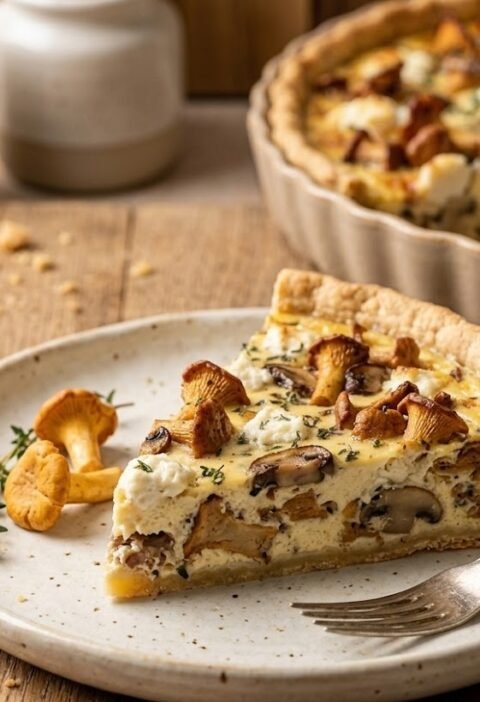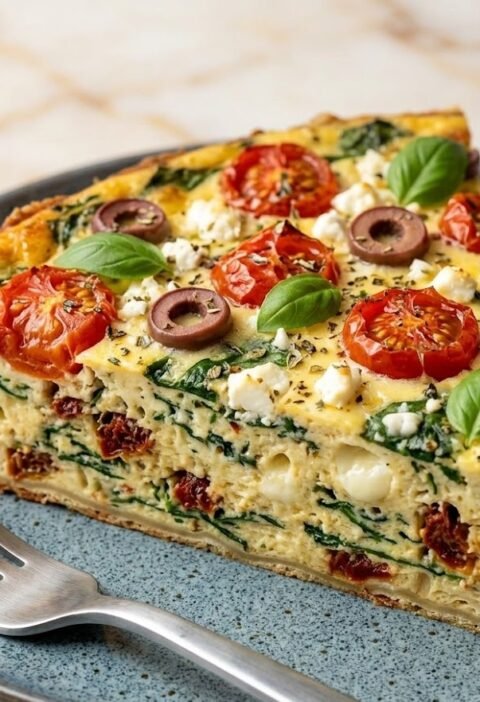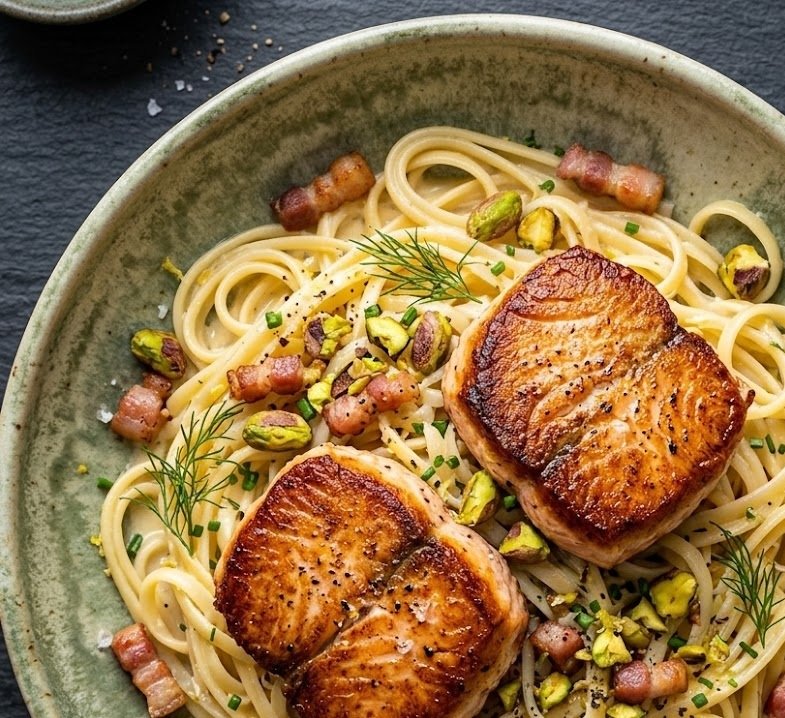
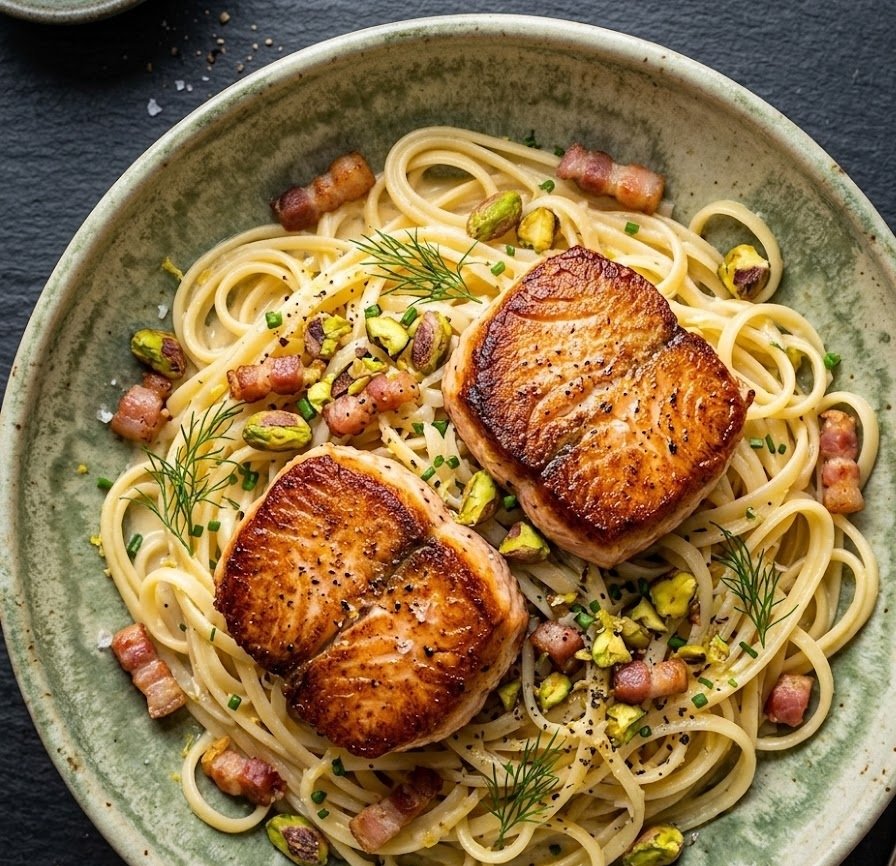
This Mary Berry-inspired salmon linguine is a creamy, lemony pasta dinner that feels special without being fussy. You get silky strands of linguine coated in a light cream sauce, sweet flakes of roasted salmon, and a bright finish from fresh herbs and lemon zest. It’s an easy, weeknight-friendly recipe that tastes like something you’d order at a good café. Total time is about 35 minutes, start to finish.
Ingredients
For the salmon
- 4 salmon fillets (about 140g each), skinless
- 1 tbsp olive oil
- 1/2 tsp fine salt
- 1/4 tsp freshly ground black pepper
For the pasta
- 350g linguine
- Salt, for the pasta water
For the creamy lemon sauce
- 1 tbsp unsalted butter
- 2 shallots, finely chopped
- 2 garlic cloves, finely chopped
- 150ml dry white wine (or 150ml fish or vegetable stock)
- 200ml double cream
- 2 tbsp crème fraîche
- 1 tsp Dijon mustard
- Zest of 1 lemon
- 2 tbsp lemon juice (plus more to taste)
- 100g frozen peas
- 2 large handfuls baby spinach
- 2 tbsp chopped fresh dill (or flat-leaf parsley)
To finish
- 30g Parmesan, finely grated (optional)
- Extra black pepper and lemon wedges, to serve
How to Make Mary Berry Salmon Linguine Recipe
Oven preparation
- Prepare the oven: Preheat the oven to 200°C or 180°C fan. Line a baking tray with foil or baking paper for easy washing up.
- Season the salmon: Place the salmon fillets on the tray, drizzle with olive oil, and season with salt and pepper.
Mixing
- Start the sauce base: Melt the butter in a large frying pan over medium heat. Add the shallots and cook for 3 to 4 minutes until soft, not browned.
- Add garlic: Stir in the garlic and cook for 30 seconds, just until fragrant.
- Build flavour: Pour in the white wine (or stock) and let it bubble for 2 to 3 minutes so it reduces slightly.
- Make it creamy: Stir in the double cream, crème fraîche, Dijon mustard, lemon zest, and lemon juice. Keep the heat gentle so the sauce stays smooth.
Baking
- Roast the salmon: Bake for 10 to 12 minutes, depending on thickness, until just cooked through. It should flake easily and still look moist.
- Cook the linguine: While the salmon cooks, bring a large pan of well-salted water to the boil. Cook the linguine until al dente (usually 9 to 11 minutes). Reserve a mug of pasta water, then drain.
- Add peas and spinach: Stir the peas into the sauce and simmer for 2 to 3 minutes. Add the spinach and stir until just wilted.
Cooling
- Rest the salmon: Let the salmon sit for 3 to 5 minutes after baking. This keeps it tender and makes it easier to flake into nice chunks.
- Flake gently: Use a fork to break the salmon into large flakes. Try not to shred it too finely so you get lovely pieces throughout the pasta.
Assembling
- Toss the pasta: Add the drained linguine to the pan with the sauce. Toss well over low heat for 1 minute so every strand gets coated.
- Loosen if needed: Add a splash of reserved pasta water, a tablespoon at a time, until the sauce looks glossy and clings to the pasta.
- Finish with salmon and herbs: Fold in the flaked salmon and chopped dill (or parsley). Taste and adjust with extra lemon juice, salt, or pepper.
- Serve: Divide into bowls and top with Parmesan if using. Serve straight away with lemon wedges.
Tips
How do I stop the salmon from drying out?
Roast it just until it flakes and turns opaque, then rest it for a few minutes. If your fillets are thin, start checking at 8 minutes. Dry salmon usually comes from an extra 2 to 3 minutes in the oven.
Why did my cream sauce split?
This usually happens when the heat is too high or the sauce is boiled hard. Keep it at a gentle simmer and stir regularly. If it looks like it’s going grainy, take the pan off the heat and whisk in a tablespoon of crème fraîche.
How do I get that silky restaurant-style finish?
Reserved pasta water is the secret. Add it slowly while tossing so the sauce emulsifies and turns glossy rather than thick and heavy.
Can I make this more budget-friendly?
Yes. Use two larger salmon fillets and flake them through the pasta, or swap in good-quality tinned salmon (drained well) and fold it in right at the end.
Serving Suggestions
- A crisp green salad with a simple lemon and olive oil dressing
- Garlic bread or warm ciabatta to mop up the sauce
- Steamed tenderstem broccoli or asparagus
- A chilled glass of Sauvignon Blanc or sparkling water with lemon
Storage
Room temperature
Creamy pasta should not be left out for long. Cool any leftovers promptly and refrigerate within 2 hours of cooking.
Refrigerator
Store in an airtight container for up to 2 days. Reheat gently in a pan with a splash of water or milk, stirring often, until hot throughout.
Freezing
I don’t recommend freezing the finished dish because cream sauces can split and the pasta softens. If you want to prep ahead, freeze cooked salmon (well wrapped) for up to 2 months and make the sauce fresh when you’re ready to eat.
Nutrition
- Calories: 620 kcal
- Carbohydrates: 64 g
- Protein: 38 g
- Fat: 24 g
- Saturated Fat: 12 g
- Sodium: 520 mg
Disclaimer: Nutrition values are estimates and will vary depending on the exact ingredients and portions used.
FAQs
Can I use smoked salmon instead of roasted salmon?
Yes. Use good-quality smoked salmon and stir it through right at the end off the heat so it stays silky. Smoked salmon is saltier, so taste the sauce before adding extra salt.
What can I use instead of double cream?
Single cream works, but the sauce will be looser. You can also use half double cream and half milk for a lighter finish. Avoid boiling the sauce once dairy is added.
Can I make salmon linguine without wine?
Absolutely. Swap the wine for the same amount of fish stock or vegetable stock, then add an extra squeeze of lemon at the end to keep the flavour bright.
How do I stop the pasta from soaking up all the sauce?
Serve it as soon as it’s tossed, and keep a little reserved pasta water to loosen it. When reheating leftovers, add a splash of water or milk and warm gently while stirring.
What other pasta shapes work for this recipe?
Tagliatelle, fettuccine, or spaghetti all work well. For shorter shapes, try penne or fusilli, but keep a bit more pasta water handy so everything stays creamy.
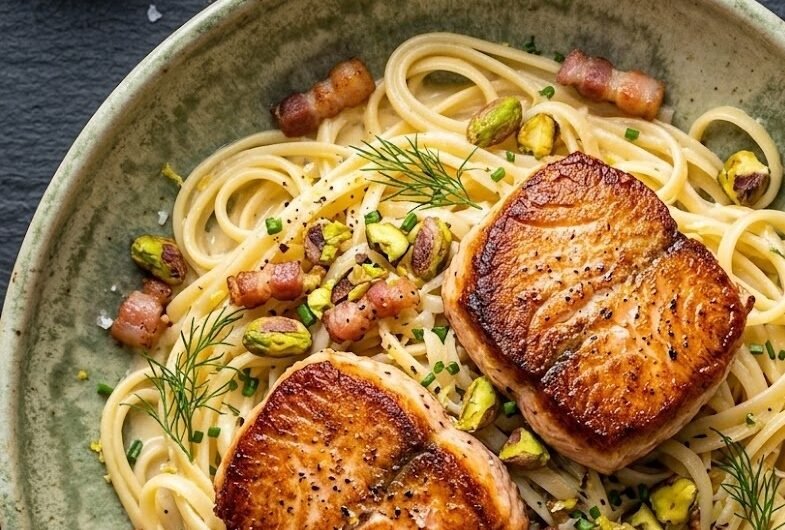
Mary Berry Salmon Linguine Recipe
Course: DinnerCuisine: British, Italian-inspiredDifficulty: Easy4
servings15
minutes20
minutes35
minutes620
kcal35
minutesCreamy lemon salmon linguine with tender roasted salmon, a silky herb-flecked sauce, and perfectly cooked pasta. An easy, elegant dinner ready in about 35 minutes.
Ingredients
- For the salmon
4 salmon fillets (about 140g each), skinless
1 tbsp olive oil
1/2 tsp fine salt
1/4 tsp black pepper
- For the pasta and sauce
350g linguine
1 tbsp unsalted butter
2 shallots, finely chopped
2 garlic cloves, finely chopped
150ml dry white wine (or 150ml fish/veg stock)
200ml double cream
2 tbsp crème fraîche
1 tsp Dijon mustard
Zest of 1 lemon
2 tbsp lemon juice (plus extra to serve)
100g frozen peas
2 large handfuls baby spinach
2 tbsp chopped fresh dill (or parsley)
- To finish
30g Parmesan, finely grated (optional)
Directions
- Preheat the oven to 200°C (180°C fan). Season salmon, drizzle with oil, and roast for 10–12 minutes until just cooked.
- Cook linguine in well-salted boiling water until al dente. Reserve a mug of pasta water, then drain.
- Soften shallots in butter, add garlic, then pour in wine/stock and simmer briefly.
- Stir in cream, crème fraîche, mustard, lemon zest and juice. Add peas and simmer until tender, then wilt in spinach.
- Flake salmon into chunks. Toss pasta with sauce, loosen with pasta water if needed, then fold in salmon and herbs. Serve with Parmesan and extra lemon.
Notes
- Don’t overcook the salmon; it should flake easily and stay moist.
- Reserve pasta water and add it a splash at a time to keep the sauce silky.
- If you prefer a lighter sauce, swap half the double cream for single cream.