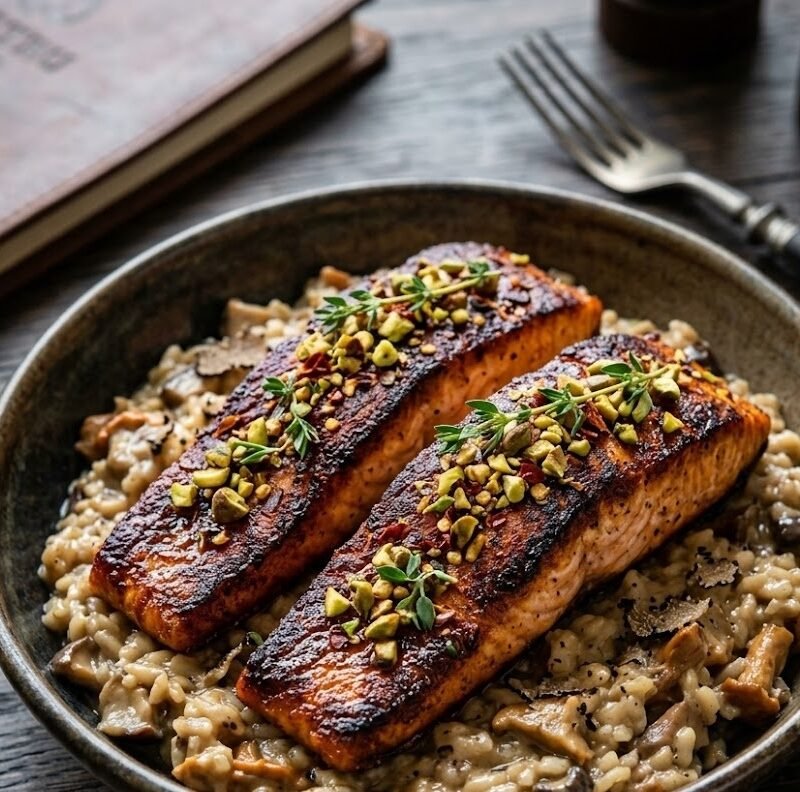
This Mary Berry salmon risotto recipe brings together tender flakes of salmon with creamy arborio rice, white wine, and a generous squeeze of lemon for a dish that feels elegant but comes together with ease. The texture is beautifully creamy and comforting, with every spoonful packed with delicate fish and fresh herbs. It is a straightforward recipe suited to confident beginners and experienced cooks alike, and the whole thing takes around 40 minutes from start to finish. If you love a good risotto but want something lighter and more refined than the usual mushroom version, this salmon risotto is the one to try.
Mary Berry’s approach to risotto keeps things fuss-free while still delivering restaurant-quality results. The salmon is gently poached and folded through at the end, keeping it moist and perfectly cooked rather than dry and overworked. A handful of fresh dill and a little crème fraîche stirred through just before serving gives it that signature richness without making the dish heavy. This is the kind of meal you can serve midweek for the family or plate up beautifully for guests at a dinner party.
Ingredients
For the Risotto
- 1 tablespoon olive oil
- 25g butter
- 1 medium onion, finely chopped
- 1 clove garlic, crushed
- 300g arborio risotto rice
- 150ml dry white wine
- 1 litre hot fish or vegetable stock
- Salt and freshly ground black pepper
For the Salmon
- 2 salmon fillets (about 300g total), skin removed
For Finishing
- Zest and juice of 1 lemon
- 2 tablespoons crème fraîche
- 30g Parmesan cheese, finely grated
- 2 tablespoons fresh dill, chopped
- Fresh chives, finely snipped (for garnish)
- Lemon wedges, for serving
How to Make Mary Berry Salmon Risotto
- Warm the stock: Pour the fish or vegetable stock into a saucepan and bring it to a gentle simmer. Keep it warm on a low heat throughout the entire cooking process. Warm stock is essential for achieving the right creamy texture in your risotto.
- Poach the salmon: Season the salmon fillets with a little salt and pepper, then lower them gently into the simmering stock. Poach for 6 to 8 minutes until the fish is just cooked through and flakes easily. Lift the salmon out with a slotted spoon, place it on a plate, and set aside. Keep the stock at a gentle simmer.
- Cook the onion base: Heat the olive oil and butter together in a large, deep pan or wide saucepan over medium heat. Add the finely chopped onion and cook gently for about 5 minutes, stirring occasionally, until soft and translucent but not coloured. Add the crushed garlic and cook for a further minute until fragrant.
- Toast the rice: Tip the arborio rice into the pan and stir well for 1 to 2 minutes. You want the grains to be fully coated in the butter and oil, and you should see the edges of the rice turn slightly translucent. This step helps the rice absorb liquid evenly and gives the finished risotto a better texture.
- Add the wine: Pour in the dry white wine and stir continuously until it has been completely absorbed by the rice. The wine adds a lovely depth of flavour and acidity that balances the richness of the finished dish.
- Add the stock gradually: Begin adding the warm stock one ladleful at a time, stirring frequently. Wait until each ladleful has been mostly absorbed before adding the next. Continue this process for about 18 to 20 minutes. The rice is ready when it is tender but still has a very slight bite in the centre. You may not need all of the stock, so add it gradually and taste as you go.
- Finish the risotto: Remove the pan from the heat. Stir in the crème fraîche, grated Parmesan, lemon zest, lemon juice, and most of the chopped dill. Season generously with salt and freshly ground black pepper. The risotto should be creamy and flow gently when spooned onto a plate. If it feels too thick, stir in a little extra warm stock.
- Fold in the salmon: Flake the poached salmon into generous chunks and gently fold them through the risotto using a large spoon. Be careful not to break the fish up too much. You want lovely visible pieces of salmon throughout the dish.
- Serve immediately: Spoon the risotto into warm bowls and garnish with the remaining fresh dill, a scattering of snipped chives, and lemon wedges on the side. Serve straight away while the risotto is at its best.
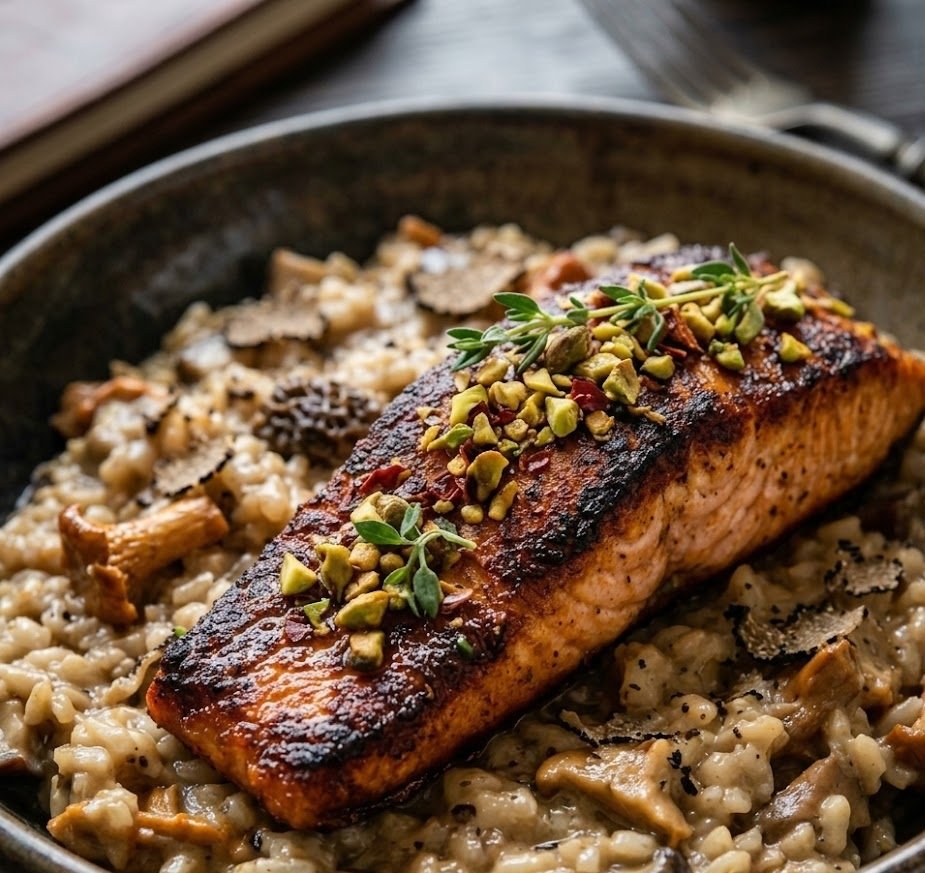
Tips for the Best Mary Berry Salmon Risotto
Why is my risotto not creamy enough?
The most common reason for a risotto that lacks creaminess is rushing the stock additions. Each ladleful needs time to be absorbed before you add the next. Stirring frequently helps release the starch from the rice, which is what creates that beautiful creamy consistency. Also make sure your stock is warm when you add it. Cold stock shocks the rice and slows down the cooking, which leads to uneven results.
Can I use hot smoked salmon instead of fresh?
You can, and it works nicely if you want a slightly different flavour. Hot smoked salmon has a deeper, smokier taste and a firmer texture. Skip the poaching step and simply flake the smoked salmon into the risotto at the end, just as you would with the poached version. Cold smoked salmon also works well, added right at the end so it just warms through.
What can I use instead of white wine?
If you prefer not to use wine, replace it with an extra ladleful of stock mixed with a teaspoon of white wine vinegar or a squeeze of lemon juice. This adds the acidity that wine normally provides without changing the overall character of the dish too much. Dry vermouth also works as a substitute if you have it on hand.
How do I stop my salmon from falling apart?
The key is gentle handling. Poach the salmon just until it is cooked through and no longer, then set it aside without breaking it up. When you fold it into the finished risotto, use a large spoon and fold rather than stir. Two or three gentle turns are all you need. Leaving the salmon in larger flakes looks more attractive and gives you lovely bites of fish in every serving.
Should I stir risotto constantly?
Frequent stirring is important, but you do not need to stand over the pan stirring without pause. Stir every 30 seconds or so to help release starch and prevent sticking. Over-stirring can actually make the rice gluey rather than creamy. Find a comfortable rhythm and let the rice do some of the work between stirs.
Serving Suggestions
- Serve alongside a simple rocket and Parmesan salad dressed with lemon and olive oil
- Pair with steamed asparagus or tender stem broccoli for a fresh, green contrast
- Add a wedge of warm crusty bread or garlic bread on the side for a more filling meal
- Serve with a chilled glass of Sauvignon Blanc or Pinot Grigio to complement the salmon
- Top with a few extra shavings of Parmesan and a drizzle of good quality olive oil before serving
- For a lighter option, serve with a cucumber and dill side salad with a yoghurt dressing
Storage
Room Temperature
Salmon risotto should not be left at room temperature for more than 1 hour due to the fish content. If you are not serving it immediately, allow it to cool quickly and refrigerate as soon as possible. Rice left at room temperature for too long can develop harmful bacteria, so prompt cooling is important.
Refrigerator
Store leftover salmon risotto in an airtight container in the refrigerator for up to 1 day. Risotto is always best eaten fresh, but leftovers can be reheated with a splash of stock to loosen the texture. Heat thoroughly in a saucepan over medium heat, stirring gently, until piping hot all the way through. The texture will be slightly thicker than when freshly made, but the flavour remains lovely.
Freezing
Freezing salmon risotto is not recommended. The rice tends to become grainy and lose its creamy texture once thawed, and the salmon can become dry and lose its delicate flavour. If you know you will have leftovers, consider making the risotto base without the salmon, freezing that, and adding freshly cooked salmon when you reheat. The plain risotto base freezes for up to 1 month in a sealed container.
Nutrition Information
The following values are approximate and based on one serving (recipe makes 4 servings).
- Calories: 520 kcal
- Carbohydrates: 62g
- Protein: 26g
- Fat: 17g
- Saturated Fat: 7g
- Sodium: 680mg
These values are estimates only and may vary depending on the exact ingredients and brands used. For precise dietary needs, please calculate using your specific ingredients.
Frequently Asked Questions
Can I use a different type of fish for this risotto?
Yes, you can substitute the salmon with other fish such as prawns, cod, or sea bass. Prawns should be added in the last few minutes of cooking so they do not become rubbery. White fish fillets can be poached in the same way as the salmon. The cooking time may vary slightly depending on the thickness of the fish you choose.
What type of rice works best for risotto?
Arborio rice is the most widely available and reliable choice for risotto. Carnaroli rice is another excellent option that holds its shape slightly better and produces an even creamier finish. Avoid using long grain, basmati, or jasmine rice as they do not release enough starch to create the signature creamy texture that risotto requires.
Can I make this salmon risotto ahead of time?
Risotto is best served immediately after cooking as it continues to thicken as it sits. If you need to prepare ahead, cook the risotto to the point just before adding the final stock addition and the finishing ingredients. Spread it on a tray to cool quickly, then refrigerate. When ready to serve, reheat gently with extra stock and stir in the crème fraîche, Parmesan, and freshly poached salmon.
Is this recipe suitable for children?
Yes, this salmon risotto is mild in flavour and naturally appealing to children. The creamy rice and soft salmon make it easy to eat, and it provides a good source of protein and omega-3 fatty acids. If serving to very young children, you can skip the black pepper and reduce the salt. You can also leave out the wine and replace it with a little extra stock.
Can I use frozen salmon for this recipe?
Yes, frozen salmon works well. Thaw it completely in the refrigerator overnight before using. Pat it dry with kitchen paper before poaching to remove any excess moisture. Freshly thawed salmon poaches just as well as fresh and will flake beautifully into the finished risotto.
What can I use instead of crème fraîche?
If you do not have crème fraîche, you can use sour cream, mascarpone, or even a tablespoon of cream cheese. Full-fat Greek yoghurt also works, though it adds a slightly tangier note. Any of these alternatives will give you the creamy richness that finishes the risotto beautifully.
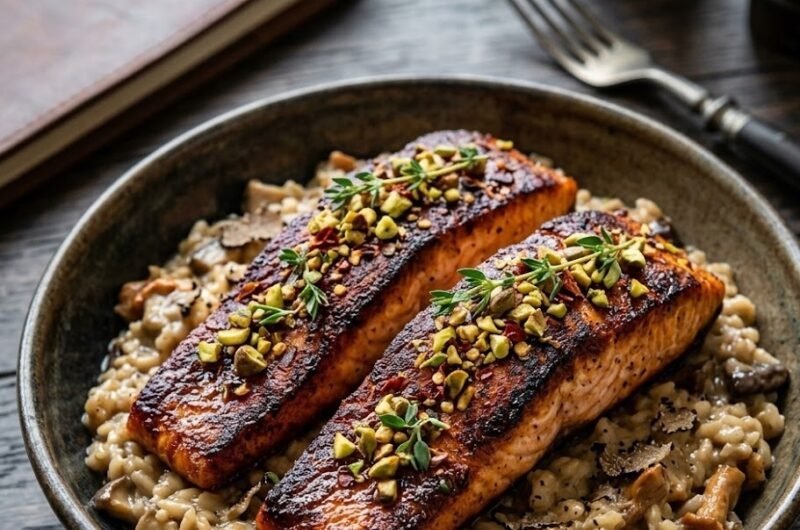
Mary Berry Salmon Risotto Recipe
Course: Main CourseCuisine: BritishDifficulty: Easy4
servings10
minutes30
minutes40
minutes520
kcal40
minutesCreamy, elegant salmon risotto inspired by Mary Berry, made with tender salmon fillets, arborio rice, white wine, lemon, and fresh dill. A comforting and impressive dish ready in about 40 minutes.
Ingredients
2 salmon fillets (about 300g total), skin removed
1 litre hot fish or vegetable stock
1 tablespoon olive oil
25g butter
1 medium onion, finely chopped
1 clove garlic, crushed
300g arborio risotto rice
150ml dry white wine
Zest and juice of 1 lemon
2 tablespoons crème fraîche
30g Parmesan cheese, finely grated
2 tablespoons fresh dill, chopped
Salt and freshly ground black pepper
Fresh chives, finely snipped (for garnish)
Lemon wedges, for serving
Directions
- Bring the stock to a gentle simmer in a saucepan and keep it warm on a low heat throughout cooking.
- Season the salmon fillets and poach them gently in the warm stock for 6 to 8 minutes until just cooked through. Remove with a slotted spoon, set aside, and keep the stock simmering.
- Heat the olive oil and butter in a large, deep pan over medium heat. Add the onion and cook gently for 5 minutes until soft and translucent. Add the garlic and cook for another minute.
- Add the risotto rice and stir for 1 to 2 minutes until the grains are coated and slightly translucent at the edges.
- Pour in the white wine and stir until it has been fully absorbed by the rice.
- Add the warm stock one ladleful at a time, stirring frequently and waiting until each addition is absorbed before adding the next. Continue for about 18 to 20 minutes until the rice is tender but still has a slight bite.
- Remove from the heat. Stir in the crème fraîche, grated Parmesan, lemon zest, lemon juice, and chopped dill. Season with salt and pepper to taste.
- Flake the poached salmon into large chunks and gently fold it through the risotto, being careful not to break the fish up too much.
- Serve immediately in warm bowls, garnished with fresh chives, a little extra dill, and lemon wedges on the side.
Notes
- Keep the stock warm at all times for the best risotto texture.
- Do not overcook the salmon or it will become dry when folded through.
- Stir frequently but not constantly to develop creaminess without making the rice gluey.