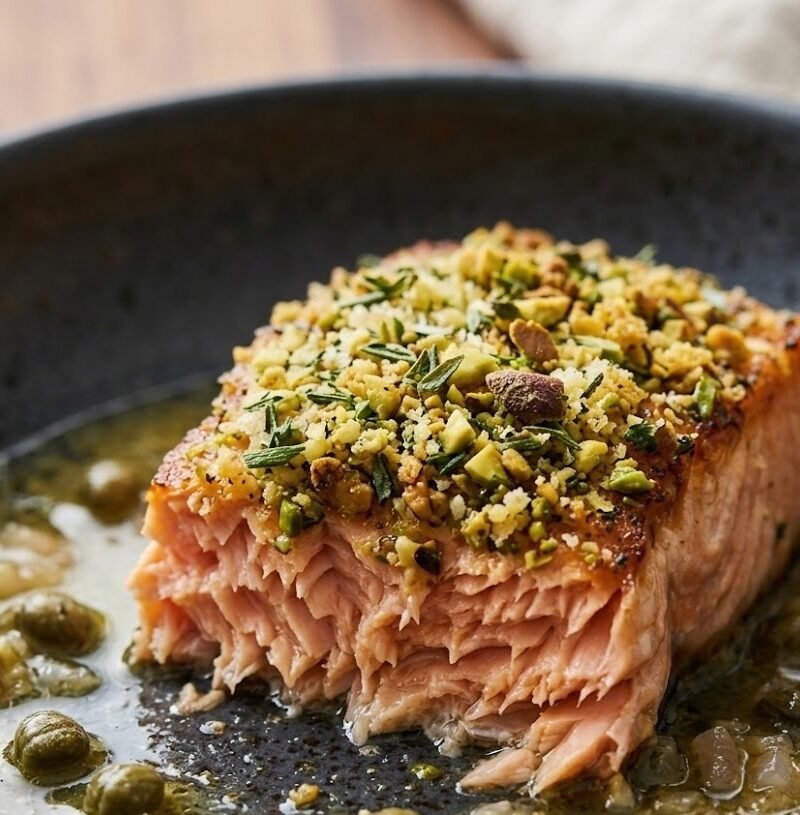
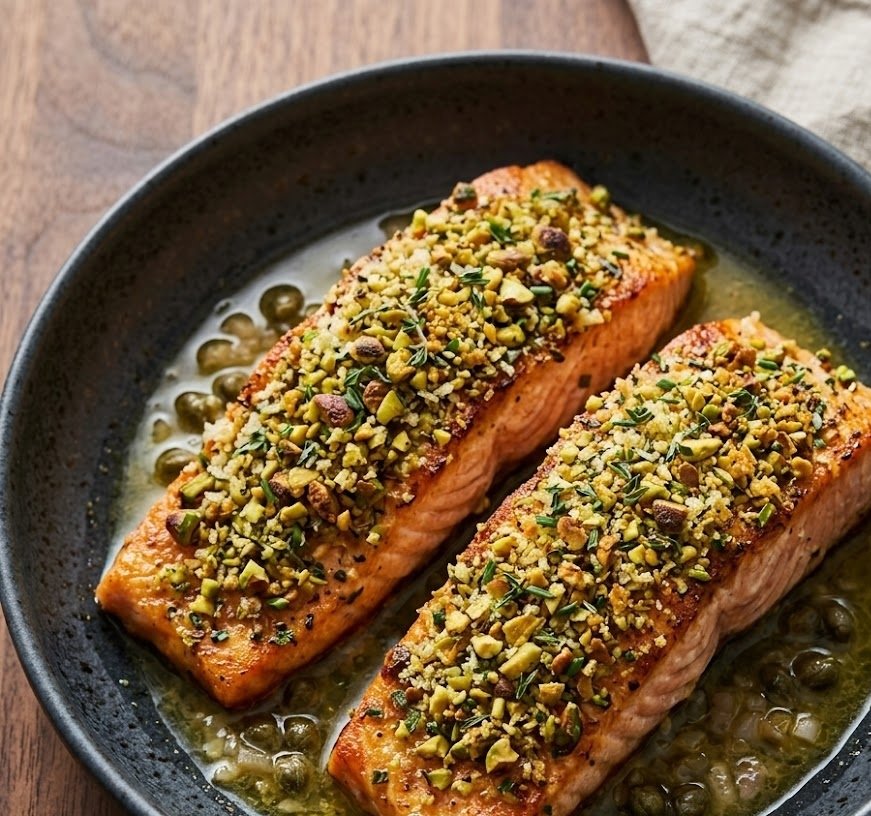
This is a Mary Berry-style salmon supper with a silky lemon sauce that tastes fresh, rich, and properly special without being fussy. The salmon turns out tender and flaky, and the sauce is buttery, lightly creamy, and bright with lemon and herbs. It’s an easy, confident weeknight dinner that still feels dinner-party worthy. Total time is about 25 minutes, including a quick rest while you finish the sauce.
Ingredients
For the salmon
- 4 salmon fillets (about 150g each), skin on or off
- 1/2 tsp fine salt
- 1/4 tsp freshly ground black pepper
- 1 tbsp olive oil
For the lemon sauce
- 25g unsalted butter
- 1 small shallot, finely chopped
- 1 garlic clove, crushed (optional)
- 120ml dry white wine (or swap for extra stock)
- 120ml fish stock (or chicken stock)
- 120ml double cream (heavy cream)
- 1 lemon, zest plus 2 to 3 tbsp juice (to taste)
- 2 tbsp chopped fresh parsley or dill
- 1 tbsp capers, drained (optional)
To serve (optional)
- Steamed asparagus, tenderstem broccoli, or peas
- New potatoes, buttery mash, or fluffy rice
- Extra lemon wedges
How to Make Salmon with Lemon Sauce
Prepare the oven and salmon
- Prepare the oven: Preheat the oven to 200°C or 180°C fan. Place a shelf in the middle of the oven so the salmon cooks evenly.
- Dry and season: Pat the salmon fillets dry with kitchen paper (this helps them brown). Season both sides with the salt and pepper.
- Get set up: Set a warm plate aside for the cooked salmon, and have your lemon zested and juiced so the sauce comes together quickly.
Start the lemon sauce base
- Soften the shallot: Melt the butter in a medium saucepan over a low to medium heat. Add the chopped shallot and cook for 3 to 4 minutes until soft, not browned.
- Add garlic (optional): Stir in the crushed garlic and cook for 30 seconds, just until fragrant.
- Reduce the liquids: Pour in the white wine and stock, bring to a simmer, and let it bubble for 4 to 6 minutes until reduced by about half. This concentrates the flavour so the sauce tastes restaurant-level, not watery.
Sear and bake the salmon
- Sear: Heat the olive oil in an oven-safe frying pan over a medium-high heat. Add the salmon (skin-side down if it has skin) and cook for 2 to 3 minutes until nicely golden.
- Flip briefly: Turn the salmon and cook for 1 minute on the second side.
- Bake to finish: Transfer the pan to the oven and bake for 4 to 7 minutes, depending on thickness. The salmon should be just opaque and flake easily.
Finish the sauce
- Add the cream: With the sauce still gently simmering, stir in the double cream and cook for 2 to 4 minutes until it lightly coats the back of a spoon.
- Add lemon and herbs: Take the pan off the heat and stir in the lemon zest, 2 tbsp lemon juice (then add more if you want it sharper), and the chopped parsley or dill.
- Finish with capers (optional): Stir in the drained capers. Taste, then add a pinch more salt or pepper if needed.
Rest, assemble, and serve
- Cool (rest) briefly: Remove the salmon from the oven and rest it on a warm plate for 2 minutes. This keeps it juicy and stops it breaking up as you plate.
- Assemble: Place the salmon on plates and spoon the warm lemon sauce over the top.
- Serve: Add your sides and a lemon wedge, then serve straight away while the sauce is silky.
Tips
How do I stop salmon from sticking to the pan?
Start with dry salmon and a properly hot pan. Add the salmon and leave it alone for the first couple of minutes. Once the crust forms, it releases naturally. If it still feels stuck, give it another 30 seconds before trying again.
How do I know when the salmon is cooked perfectly?
Look for flesh that turns opaque and flakes easily with a fork, but still looks moist in the centre. If you use a thermometer, aim for about 50 to 52°C for medium and 60°C for fully cooked.
How can I keep the lemon sauce from splitting?
Once the cream goes in, keep the heat gentle and avoid a hard boil. Also add the lemon juice off the heat if you can, then taste and adjust. High heat plus lots of acid is the usual culprit.
Can I make the sauce more or less lemony?
Yes, and it’s worth doing to suit your taste. Start with 2 tablespoons of lemon juice, then add more a teaspoon at a time. The zest adds fragrance without extra sharpness, so don’t skip it.
Serving Suggestions
- New potatoes with a little butter and parsley
- Steamed asparagus or tenderstem broccoli
- Wilted spinach with a pinch of nutmeg
- Rice or orzo to catch every bit of sauce
- A crisp green salad with a simple vinaigrette
Storage
Room temperature
Do not leave cooked salmon or the cream sauce out for longer than 2 hours (1 hour if the room is warm). Get leftovers cooled and into the fridge promptly.
Refrigerator
Store salmon and sauce in an airtight container for up to 2 days. Reheat gently in a saucepan over a low heat, adding a small splash of water or stock to loosen the sauce. Avoid boiling or the sauce can split and the salmon can dry out.
Freezing
Salmon can be frozen for up to 1 month, but cream sauces can change texture after freezing. If you do freeze, freeze the salmon separately and make a fresh sauce when serving for the best result.
Nutrition
- Calories: 480 kcal
- Carbohydrates: 5 g
- Protein: 34 g
- Fat: 35 g
- Saturated fat: 15 g
- Sodium: 680 mg
Disclaimer: Nutrition values are estimates and will vary depending on the exact ingredients and brands you use.
FAQs
Can I use frozen salmon fillets for this recipe?
Yes. Thaw the salmon fully in the fridge overnight, then pat it very dry before seasoning. Extra moisture is the main reason frozen fillets don’t brown well, so don’t skip the drying step.
What can I use instead of white wine in the sauce?
You can replace the wine with extra stock. For a similar lift, add 1 teaspoon of Dijon mustard or a small splash of extra lemon juice at the end, then taste and adjust.
Can I make the lemon sauce without cream?
Yes. Swap the cream for 150ml crème fraîche (stirred in off the heat) or use a little more butter and reduce the stock further for a glossy, lighter pan sauce.
How do I stop the sauce from tasting too sharp?
Add the lemon juice gradually and keep tasting. A little extra cream or a small knob of butter will soften sharpness, and a pinch of salt often balances acidity more than you’d think.
Can I bake the salmon only and skip the pan-sear?
Yes. Bake at 200°C (180°C fan) for about 10 to 12 minutes, depending on thickness. You’ll miss the crisp sear, but it’s still delicious. Make the sauce on the hob while the salmon bakes.
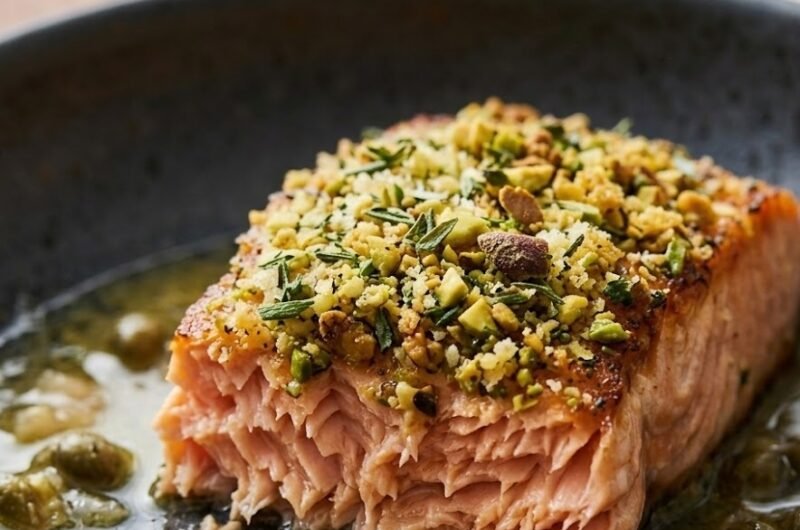
Salmon with Lemon Sauce
Course: MainCuisine: BritishDifficulty: Easy4
people10
minutes15
minutes25
minutes480
kcal25
minutesPan-seared salmon finished in the oven, served with a silky lemon and herb sauce. Fresh, creamy, and ready in about 25 minutes.
Ingredients
4 salmon fillets (about 150g each), skin on or off
1/2 tsp fine salt
1/4 tsp freshly ground black pepper
1 tbsp olive oil
25g unsalted butter
1 small shallot, finely chopped
1 garlic clove, crushed (optional)
120ml dry white wine (or extra stock)
120ml fish stock or chicken stock
120ml double cream (heavy cream)
1 lemon, zest and 2–3 tbsp juice
2 tbsp chopped fresh parsley or dill
1 tbsp capers, drained (optional)
Directions
- Preheat the oven to 200°C (180°C fan). Pat the salmon dry, season, and warm a plate.
- Soften shallot in butter, then add wine and stock and reduce for a few minutes.
- Sear salmon in a hot pan, then transfer to the oven to finish cooking.
- Stir cream into the reduced sauce and simmer gently until lightly thickened.
- Add lemon zest and juice, herbs, and capers (if using). Taste and season.
- Rest salmon briefly, then spoon over the lemon sauce and serve immediately.
Notes
- Keep the sauce at a gentle simmer after adding cream to avoid splitting.
- For neat portions, cook salmon until it flakes easily and is just opaque in the centre.
- Leftover sauce is lovely over new potatoes or steamed greens.